
|
Photo taken inside of a glacier on April 14th, 2022. 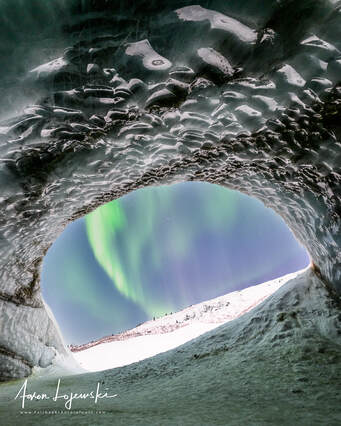 The hard truth is nobody knows for sure exactly when the best day will be. I've seen breathtaking aurora displays during every single month of the season but my favorite time of all is April. Read to the end to find out why. Within a roughly 3 day time horizon, there are some forecasts that are reasonably accurate for predicting the northern lights like at NOAA's Space Weather Prediction Center's forecast. Beyond that timeline, forecasts are typically highly inaccurate. I repeat, beyond that time frame they are typically highly inaccurate. Asking what day is going to be the best, weeks or months out, is like asking for advise on which lottery ticket you should buy (except with Fairbanks Aurora Tours odds are stacked in your favor, not against you). The aurora has a high degree of variation from night to night and ultimately watching it is like fishing, you need to put your line or dipnet in the water and be patient. For aurora viewing, that means going outside around solar midnight, getting away from light pollution, and looking and waiting for the magic to begin. It also must be dark outside. As far north as Fairbanks, AK is, we only get civil twilight at "night" near June 21st. Therefore, the best time to come is anytime between August 21st and April 21st when you have time and the means to and it is dark in Fairbanks. Nobody is getting any younger. Seize the day. Solar activity?Scientists have identified, in general, that there is better alignment of the polarity of the solar wind with earth's geomagnetic field around the equinoxes. This should result in, on average 20-30%, more induction of the solar wind at that time and a increased chance of active aurora. Therefor, with respect to solar activity alone, the months close to the equinox (that is September, October, March, and April) have better odds of active aurora. For example, in this scientific article from Geophysical Research Letters, it is stated that "Global geomagnetic activity show a dominant annual variation with equinoctial maxima alternating between Spring ... and Fall." What about weather patterns?This is something that people rarely ask about but is far more important than any solar trend. From my perspective the worst weather conditions are that in which it is raining or snowing. Dry is better. Based on the data the driest time of the entire aurora season is from April 11th to April 20th where on average there is 0.00 inches of precipitation! It is also very close to the Spring Equinox, hint hint. Unfortunately there is a pervasive myth that the aurora magically and suddenly disappears April 1st so few travelers come up to enjoy this time. Generally though, as the aurora season progresses the historic average precipitation falls. Our summer is our wet season and August / September catch the tail end of it. 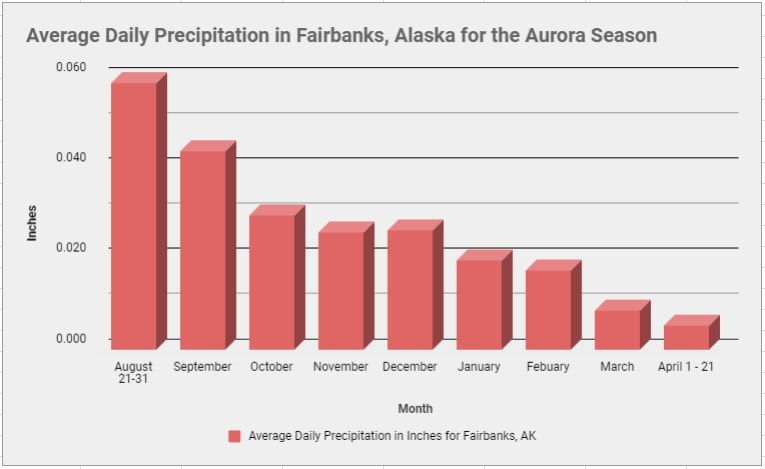 ConclusionThe best time to come is when you are able to from August 21- April 21. Should you have the luxury of picking your time and not having it dictated by practical life considerations, I suggest April for the following reasons.
1. It is close to the Spring Equinox when aurora is more likely to be active. 2. It has the driest streak of historical weather during the entire season and as a month is the driest of them all. 3. It is far warmer than the other months (except August and September but they get a lot more precipitation) 4. Since there is a myth that the aurora magically disappears April 1st, far fewer people come to enjoy the lights and due to less demand: A. Flights are less crowded and cheaper. B. Hotels are less crowded and cheaper. 5. Lastly, did I mention it is likely to be warmer, dryer, less expensive, less crowded, and have increased odds of active aurora?
4 Comments
If you have a Nikon camera with a detachable lens but you do not know know the difference between a full frame and crop sensor, chances are you have a Nikon DX or cropped sensor camera. All of these cameras work fine for the aurora and there is not a substantial low light performance gap from the cheapest to the most expensive. If you are planning on picking one up, your best value, for northern lights purposes, will be in getting an inexpensive DX sensor camera and spend your money on a lens where you can meaningfully improve your low light performance. The 7000 series does have one big advantage for shooting in the heart of winter, its battery. The batteries of the 5000 and 3000 series tend to freeze up easily so it is important to bring 2-3 spares to cycle them through out the night. With the 7000 series one batter is normally enough, even when it is cold (-20F or colder), but it is best practice to have one backup battery for it. 7000 Series Battery - Nikon EN-EL15c
5000/3000 Series Battery - Nikon EN-EL14a
Nikon DX Cameras with Mid-2022 Amazon Pricing 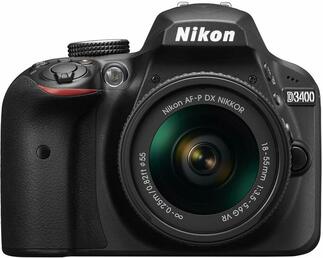 Most of the 3000 and 5000 series cameras come with a kit lens, the 18-55mm F3.5 lens like seen in the photo above. The kit lens can work for the aurora but it is difficult to manually focus in the dark due to no focus markings on the focus ring and it is at best, moderately capable for low light. You will have a vastly improved experience and photos by pairing our recommended lens below with your Nikon DX camera. Lens Recommendation
Having a base layer of insulation all across your body will greatly aid in keeping you warm and comfortable while out viewing Aurora. You can add this to clothing you already have for additional warmth.
Socks: I suggest a high quality wool sock in addition to your warmest boot. Snow Pants: This one here is lower cost item if you plan on only using it for this trip, I personality own a pair and the insulation is light to moderate. For a better insulated and more expensive type look at Columbia's snow pants, they are a bit warmer. Long Underwear: For early fall wear men's or women's long underwear under your pants or snow pants for added comfort but by late October or so it is often extremely cold. You want to be wearing heavy weight long underwear by this time. Long Sleeve Wicking Shirt: You will want a quick drying long sleeve shirt for a base layer like this Hanes men's or woman's shirt. Long Sleeve Warm Shirt: After your base layer when it is very cold you want to wear a shirt with insulation. These men's flannel or woman's flannel shirts add a lot of warmth. Insulated Mid-Layer: I personally prefer Columbia's insulated jackets with a omni heat reflective layer for my first outer layer. When it is really cold you will need a winter coat outside of this. Gloves: My strategy for photography is to wear light gloves like this for men or women that I can operate the camera with and put my hands in warm coat pockets the rest of the time. Hat: You should bring your warmest hat, if you don't have a winter hat and want a relatively inexpensive one look into the trapper hats. No matter what hat you bring getting a good Turtle Fur Fleece will make it that much warmer, it is highly recommended. Hand warmers are nice to have too. The most important etiquette tip for aurora viewing and photography is do not make light. If you must make some light, make as little as possible, make red light, and be as discreet as possible.
The aurora can be extremely bright and easy to see and at other times it can be at so dim that it is at the edge of detectability to the human eye. Having the best natural night vision that you can have will help you see the northern light more vibrantly when it is bright and make the difference between you seeing it and it being invisible to you when it is on the dim side. Secondly, shining lights is extremely disruptive to night time photography and to people around you and their night vision. Even just looking at your cellphone screen can damage your night vision. Our eyes have rod and cone light receptors in them. The cones help us see color vision and the rods help us see black and white or night vision. From personal experience it takes at least 10-15 minutes to really get good natural night vision but the science measures increases to our night vision up to a few hours after our eyes are in a very dark environment! It is known that the time this takes increases with age so if you are older it could take even longer. Unfortunately, our eyes adapt to brightness far more rapidly than they do darkness so it will take you far longer to regain your night vision than the time spent looking at light sources like flash lights. Looking at your smart phone will also have a damaging effect on your night vision as will your cameras LCD screen. It is best to reduce your cameras screen brightness to the minimum possible in part for this reason. Even just looking at your cellphone screen can damage your night vision. We had a tour where a group of three people just couldn't help themselves from looking at their cellphone screens most of the night. The aurora was dim that night and everyone on the tour could see it but the three that constantly looked at their cellphones, it was invisible to them because looking at their cellphones damaged their night vision just enough. Most nights the aurora is brighter than this but you never know just what it might do or how spectacular it may be. It's best to have your eyes ready for whatever might occur. Our tour is mobile so that we can select the best viewing location for the aurora on any night but there are actually many criteria that go into this. One of them is how well known the area is. Unfortunately, a fare to large portion of visitors to the Fairbanks area practice terrible aurora viewing etiquette, not limited to using bright headlights, leaving them on for long periods of time while parked, shining flashlights all over, using flashes on the camera continuously, etc. Quite frankly, it has destroyed the potential of many well known aurora viewing locations near Fairbanks. Rather than attempting to educate everyone we run in to on this issue, it is far easier to avoid other people and their localized light pollution. We intentional go for spots that are unknown and we do not advertise areas we may frequent as to keep them more private and free of localized light pollution. |
AuthorAaron Lojewski is a long time Fairbanks resident, Tour Guide, and Aurora / Northern Lights photographer. ArchivesCategories
All
|
 RSS Feed
|
Pick Up Locations
|
Fairbanks Aurora Tours LLC © COPYRIGHT 2024 ALL RIGHTS RESERVED.